MILANO CIUDAD DE CAMPO
Competition - Felix Candela
Finalist

Site: Milan
Project: 2024
Team: Guillermo Sánchez Cárdenas, Kevin Santus, Jacopo Taccari

«I am convinced that the future is lost somewhere in the dumps of the non-historical past; it is in yesterday’s news-papers, in the jejune advertisements of science-fiction movies, in the false mirror of our rejected dreams.» Smithson (1967, 51)

Milano Ciudad de Campo, finalist for the Premio Felix Candela, proposes a radical yet careful rethinking of Milan as a city historically grafted onto water and countryside. Drawing on Robert Smithson’s vision of the city as a layered landscape of latent traces, the project interprets climate adaptation as an opportunity to rediscover forgotten infrastructures, imaginaries, and forms of coexistence embedded in the urban fabric.
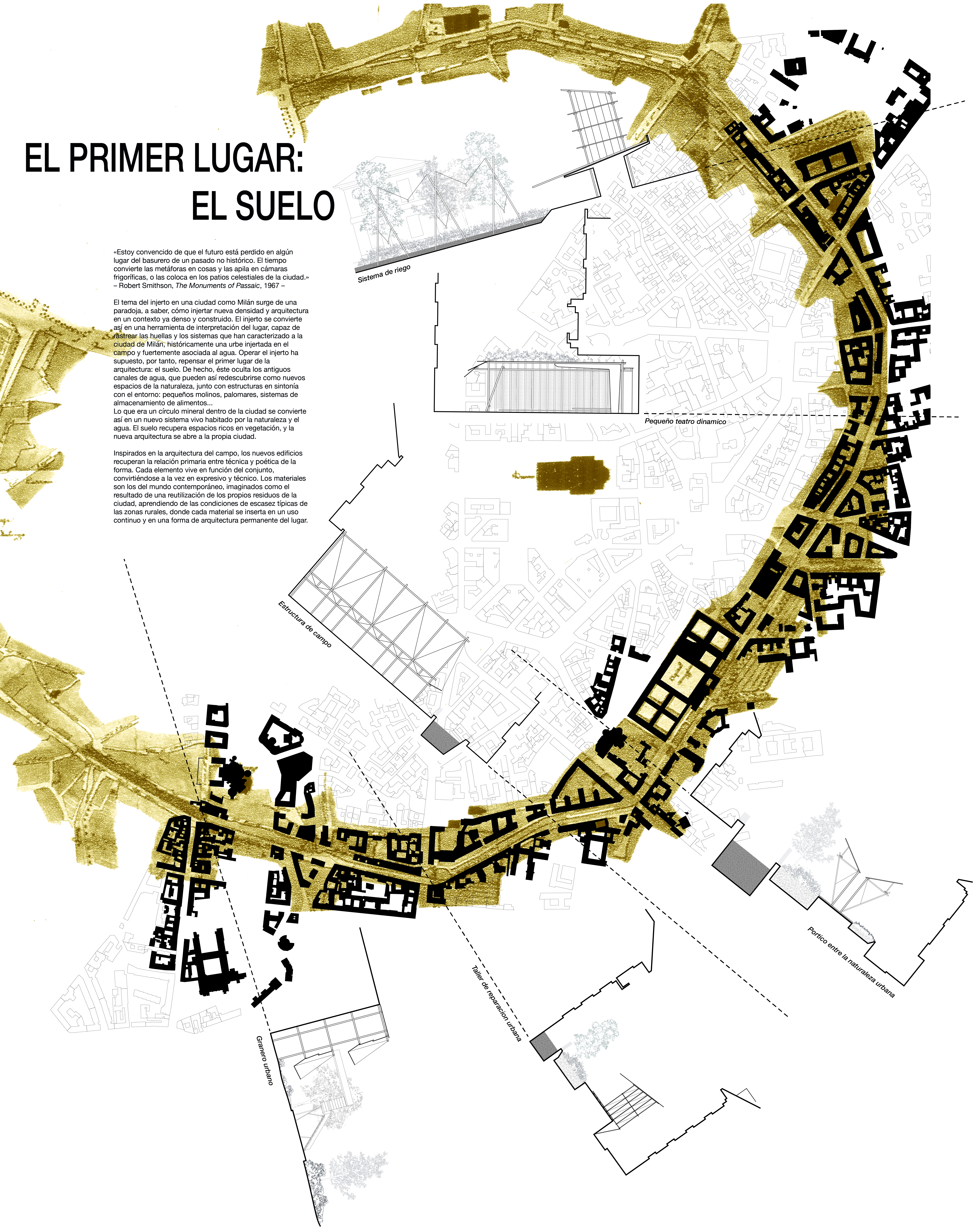
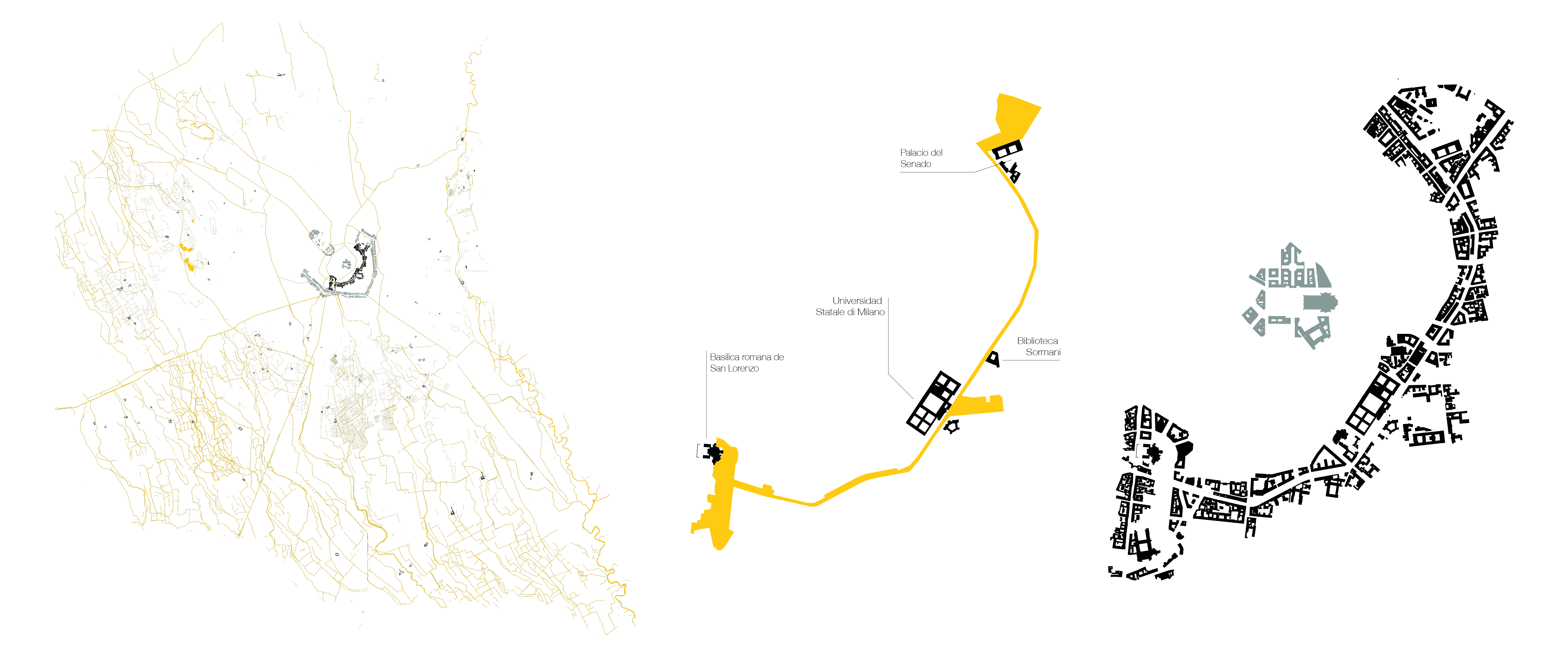
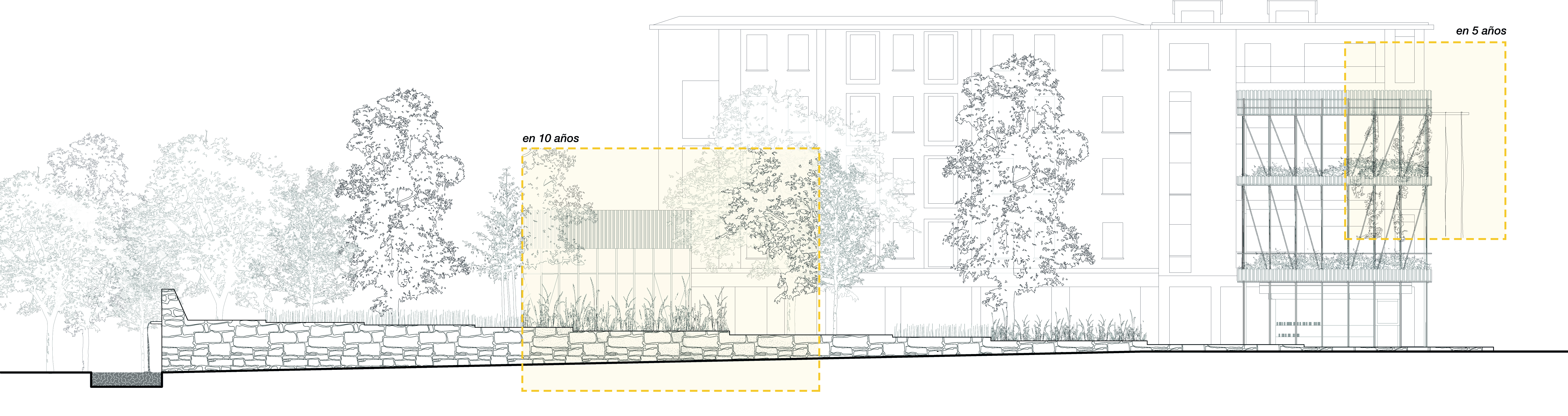
The intervention focuses on the southern sector of Milan’s first ring, along an axis connecting the Basilica of San Lorenzo to Villa Belgiojoso Bonaparte, an area today fully mineralized and strongly affected by the urban heat island. Rather than adding new density, the project works through grafting, using the soil itself as the primary architectural element. Earthworks, terrapieni, and micro-architectures reintroduce permeability, vegetation, and water, while reopening selected historic canals to reestablish an ecological and symbolic proximity between city and nature.
This new system becomes a living infrastructure that supports shared gardens, water basins, and a constellation of small rural-inspired structures such as mills, food preservation devices, and irrigation elements. Built through reuse and low-tech construction, these architectures embrace scarcity as a design value, transforming discarded materials into permanent spatial devices. The result is a mineral ring turned into a productive and inhabited landscape, where biodiversity, microclimatic cooling, and collective care practices converge.
Rather than proposing a manifesto, the project frames rurality as a cultural and operational principle, echoing Smiljan Radic’s notion of fragile monumentality and Felix Guattari’s three ecologies. Milano Ciudad de Campo reimagines urbanity not in opposition to nature, but as a relational ecology where minor architectures and minimal actions generate new forms of habitability.
 Fràgil Fortuna