PLAZA NOMADA
Competition | Public pavilion for two squares in Rome and Mexico City

Site: Rome + Mexico City
Project: 2025
Team: Guillermo Sánchez Cárdenas, Kevin Santus, Arianna Scaioli

A square that is a pavilion,
a miniature echo of past architectures.
A pavilion that becomes an arena for exchange
between people, with the city, with history.
Not just an interweaving of wood and fabric,
but of actions and care, in a square that will move.
The square is the intersection of streets, people, stories.

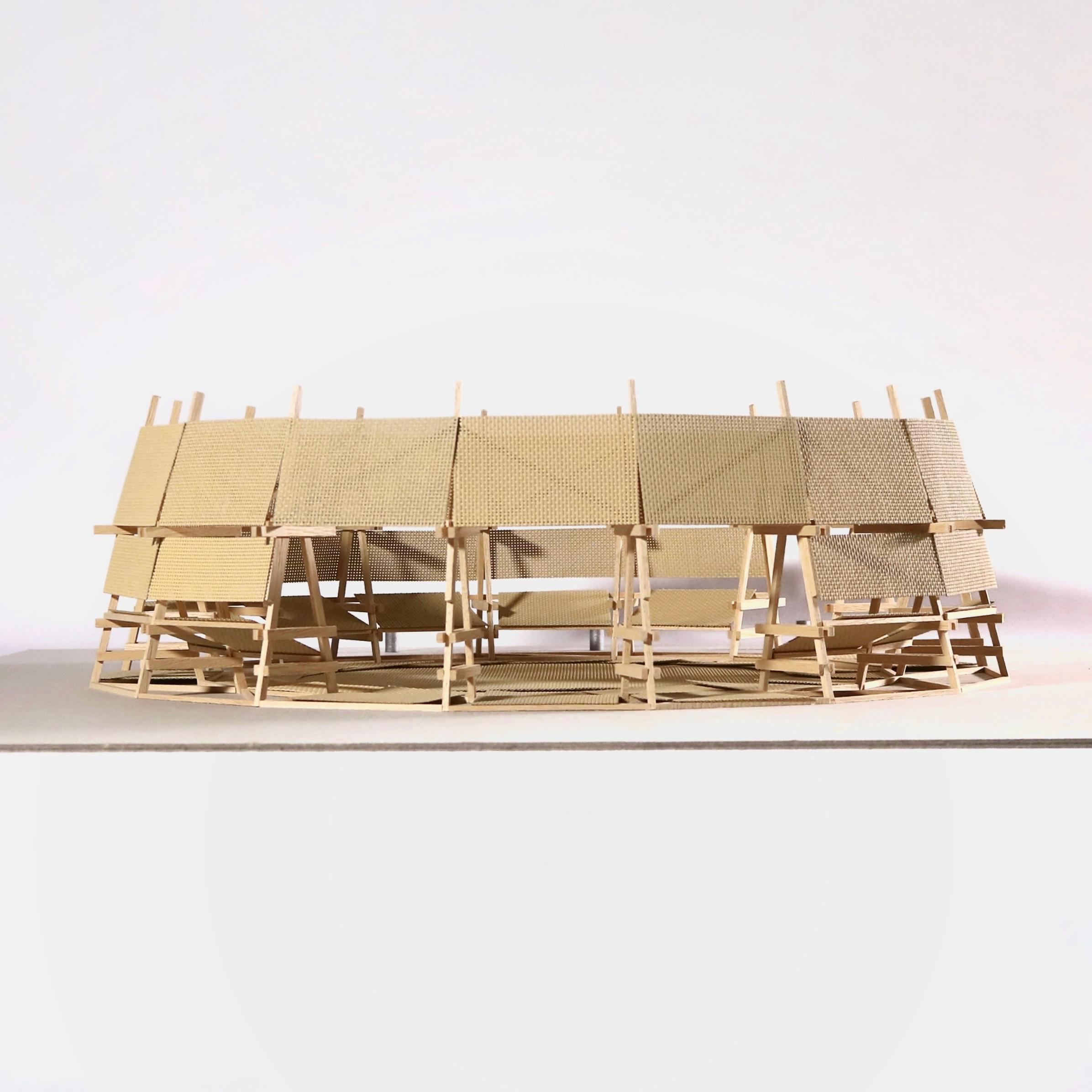
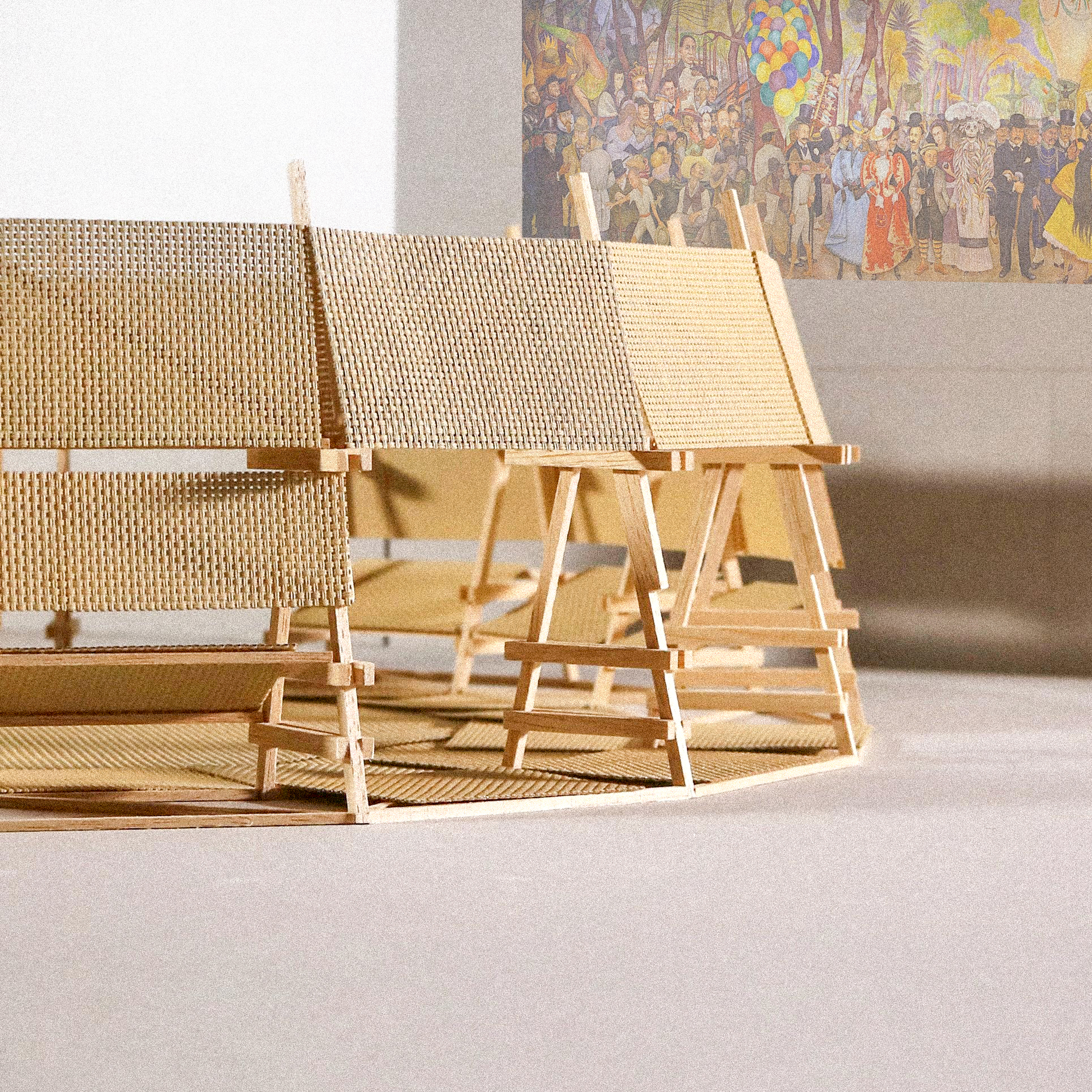
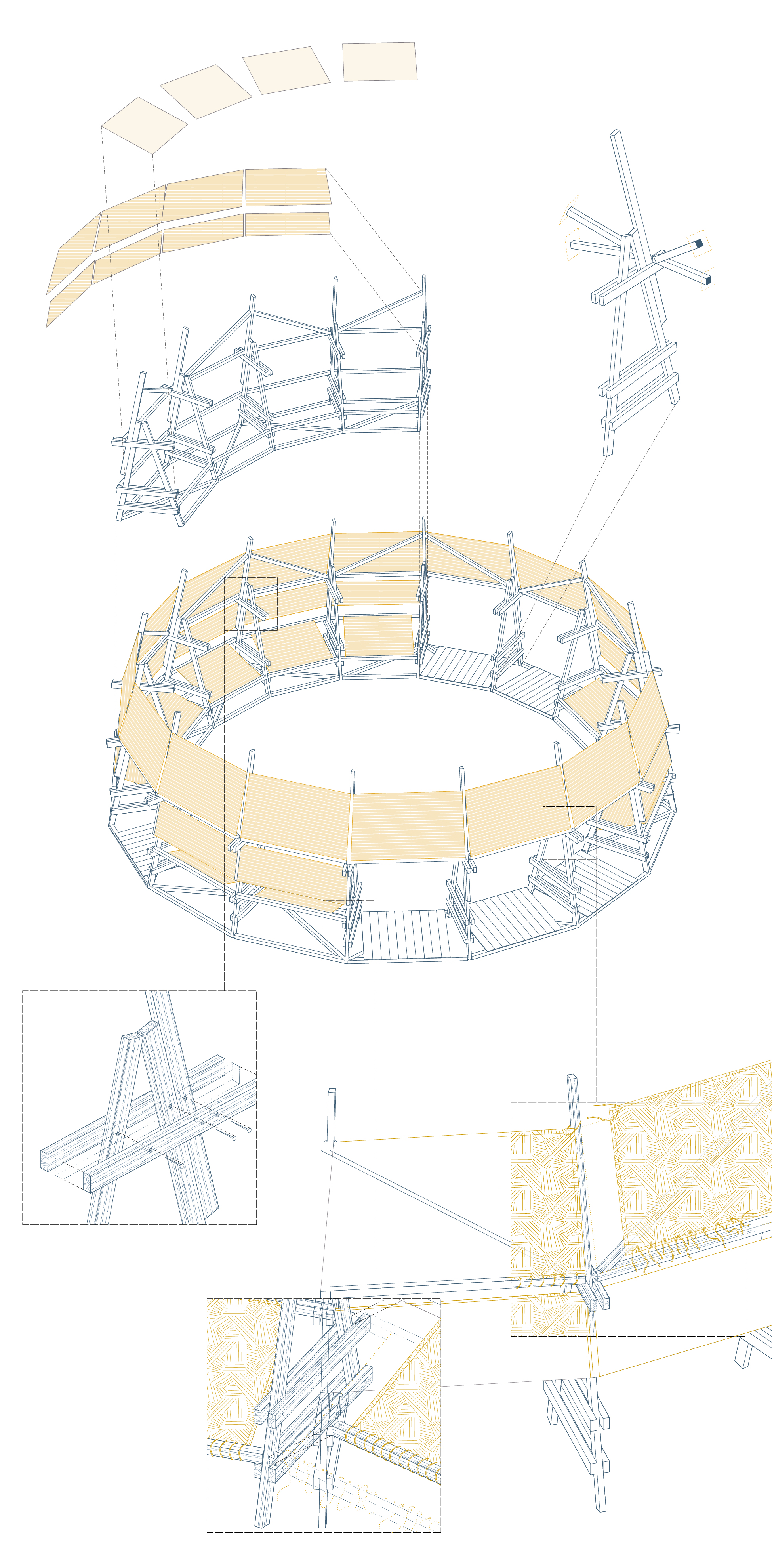
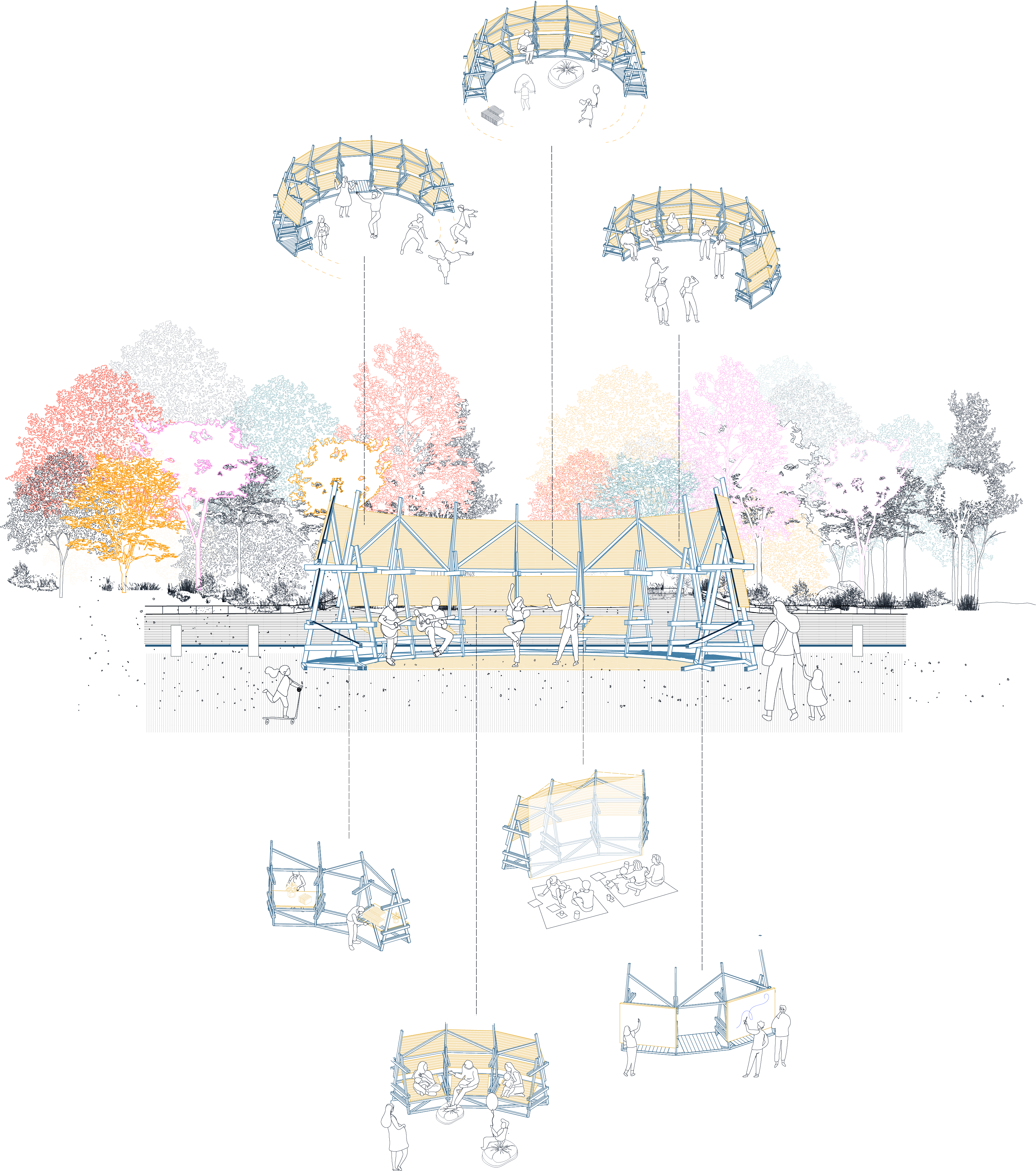
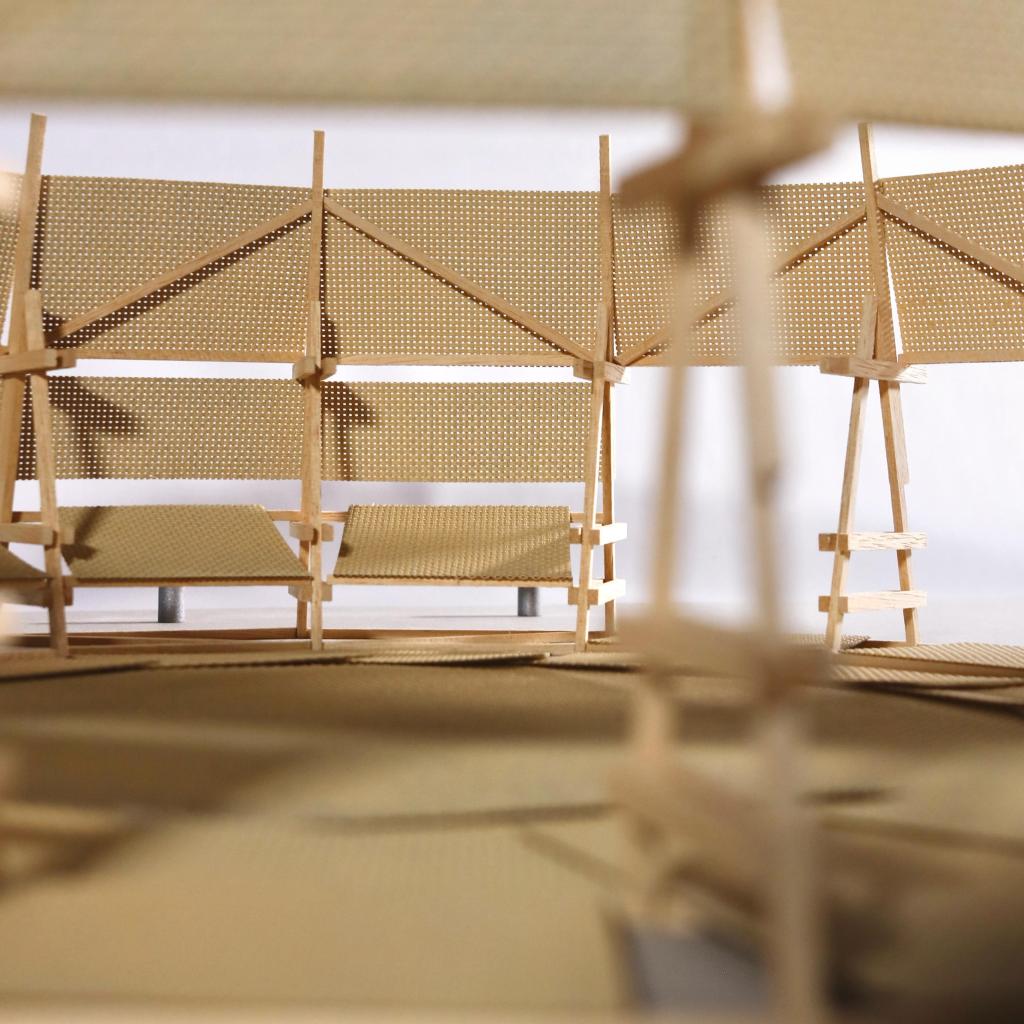
Plaza Nómada reflects on the social role that emerges from the intersection of history and community, translating the idea of a “square within the square” into architectural form. Conceived as a circular pavilion, it invites conversation, performance, rest, and informal gathering. Wrapped in jute fabric, the structure evokes simplicity not as decoration but as a symbol of sharing and transformation, adaptable to domestic and collective uses. The fabric provides shade and integrates small seating elements within the wooden frame, while multiple openings allow access from different directions, welcoming diverse flows of people.
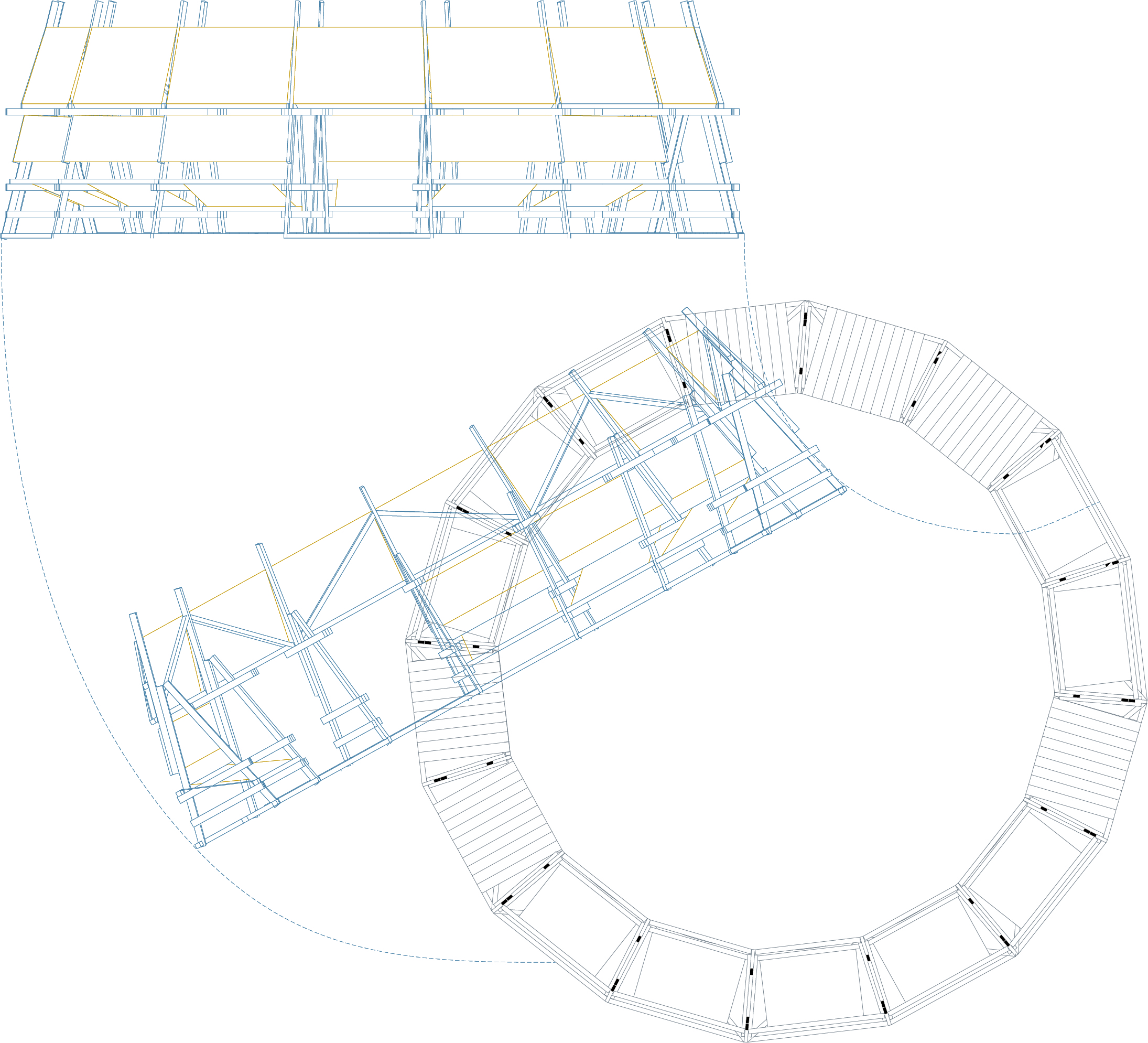
Designed for disassembly, the pavilion can be reassembled as a whole or divided into semicircles and redistributed across different urban spaces. In this sense, Plaza Nómada expresses a condition of urban nomadism, offering places of encounter, hospitality, and care. Located in Piazza Balsamo Crivelli, a site marked by layered histories of protest and community life, the project seeks to act as a catalyst for relationships rather than a purely aesthetic object, supporting renewal through co-designed activities with local associations.
The pavilion is conceived as an open, adaptable, and appropriable infrastructure, inspired by Umberto Eco’s idea of the “open work”. Its porous structure enables multiple uses and non-hierarchical relationships between communities, designers, and the urban context. Built from a modular grid of fir wood slats assembled with dry systems, it is lightweight, reversible, and easy to relocate. Through a slow strategy centered on everyday life, Plaza Nómada makes visible practices of maintenance, hospitality, and care, framing architecture as a political practice that promotes citizenship rather than a finished form.
 Fràgil Fortuna