GARDEN ON COMMONS
Competition |  7th Tallinn Architecture Biennale (TAB): RESOURCES FOR A FUTURE

Site: Tallin
Project: 2024
Team: FranzosoMarinelli Studio, Guillermo Sanchez Cardenas, Kevin Santus

The project reflects on the contemporary architectural debate between authorship and social agency, questioning the role of design as a collective medium rather than a closed object. It proposes a mediation between architectural control and actions of the commons, transforming the project into a sensitive space of reuse through a double architectural condition defined by different aims and temporalities.
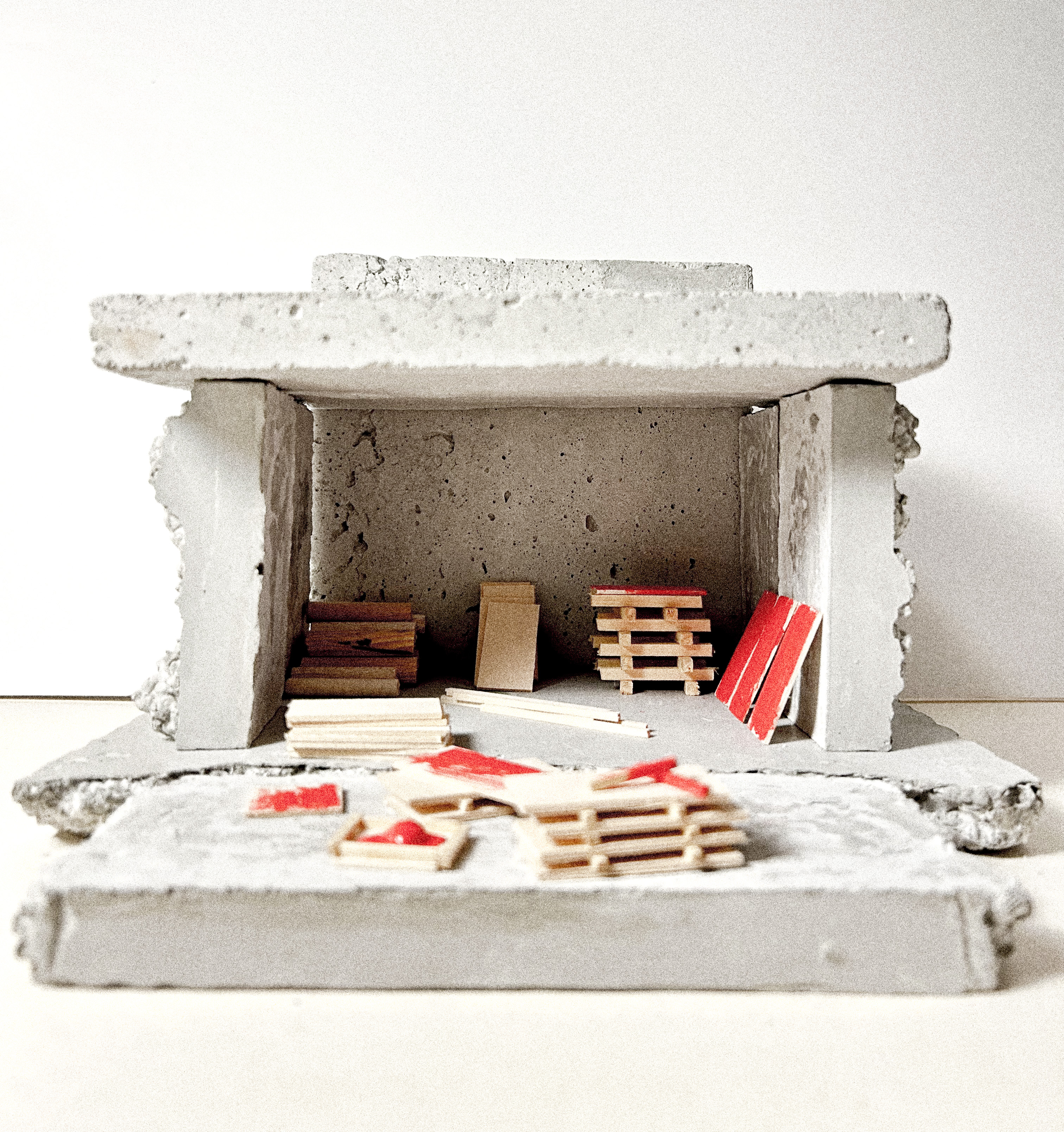
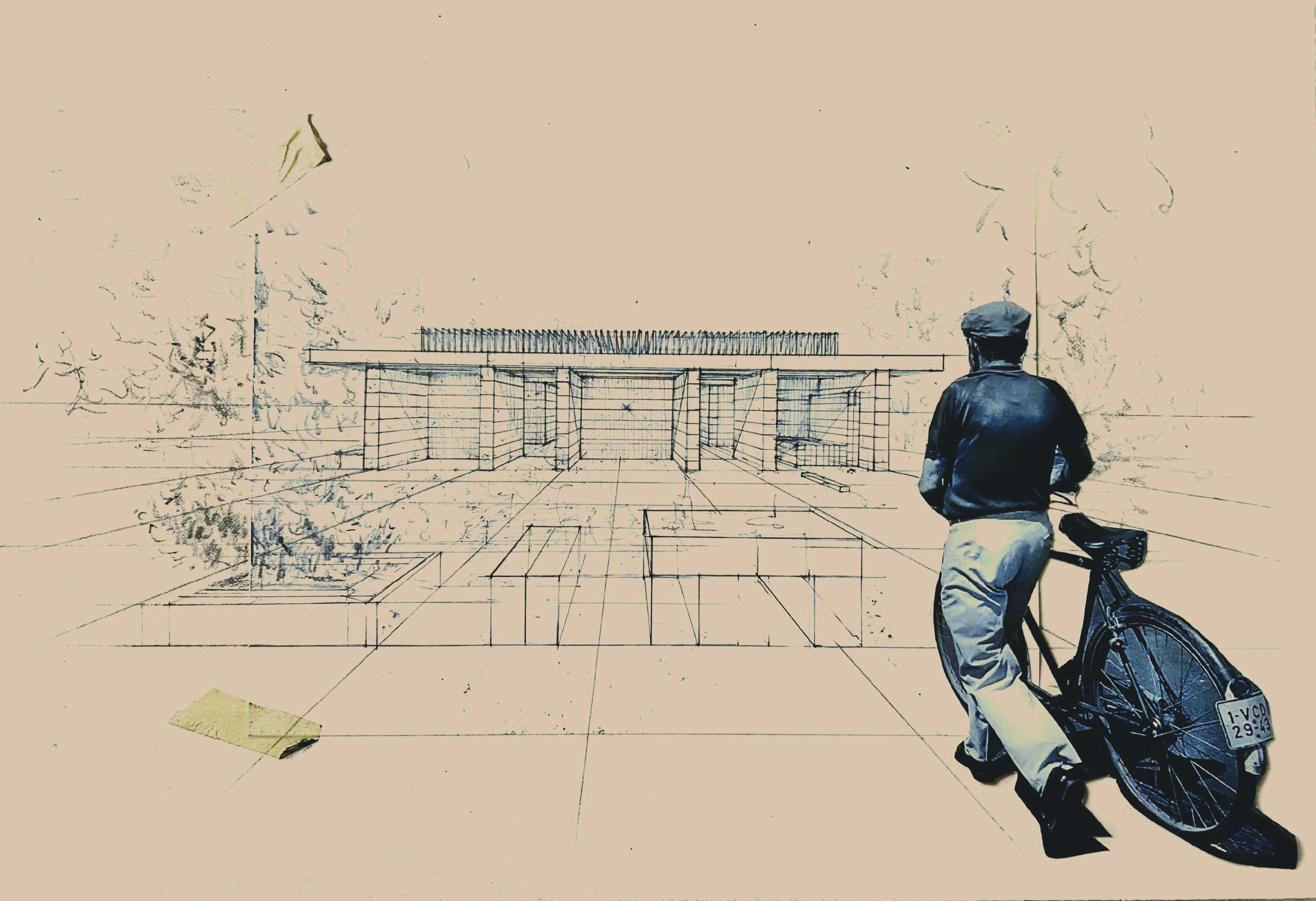
The first layer addresses the need for a robust urban pavilion for waiting and commuting in Tallinn. The shelter is built by piling reused concrete blocks from local factories, forming monolithic elements that scan the space, create niches, and support a roof made of thinner reused components. Durability becomes a central aspect of sustainability, embedded not only in reuse but in the long life of the structure itself. The form derives directly from the dimensions of the available elements, expressing architectural authorship through the control of composition and structure. Beneath the canopy, people can stand, wait, and wander, inhabiting a moment of suspension before movement.
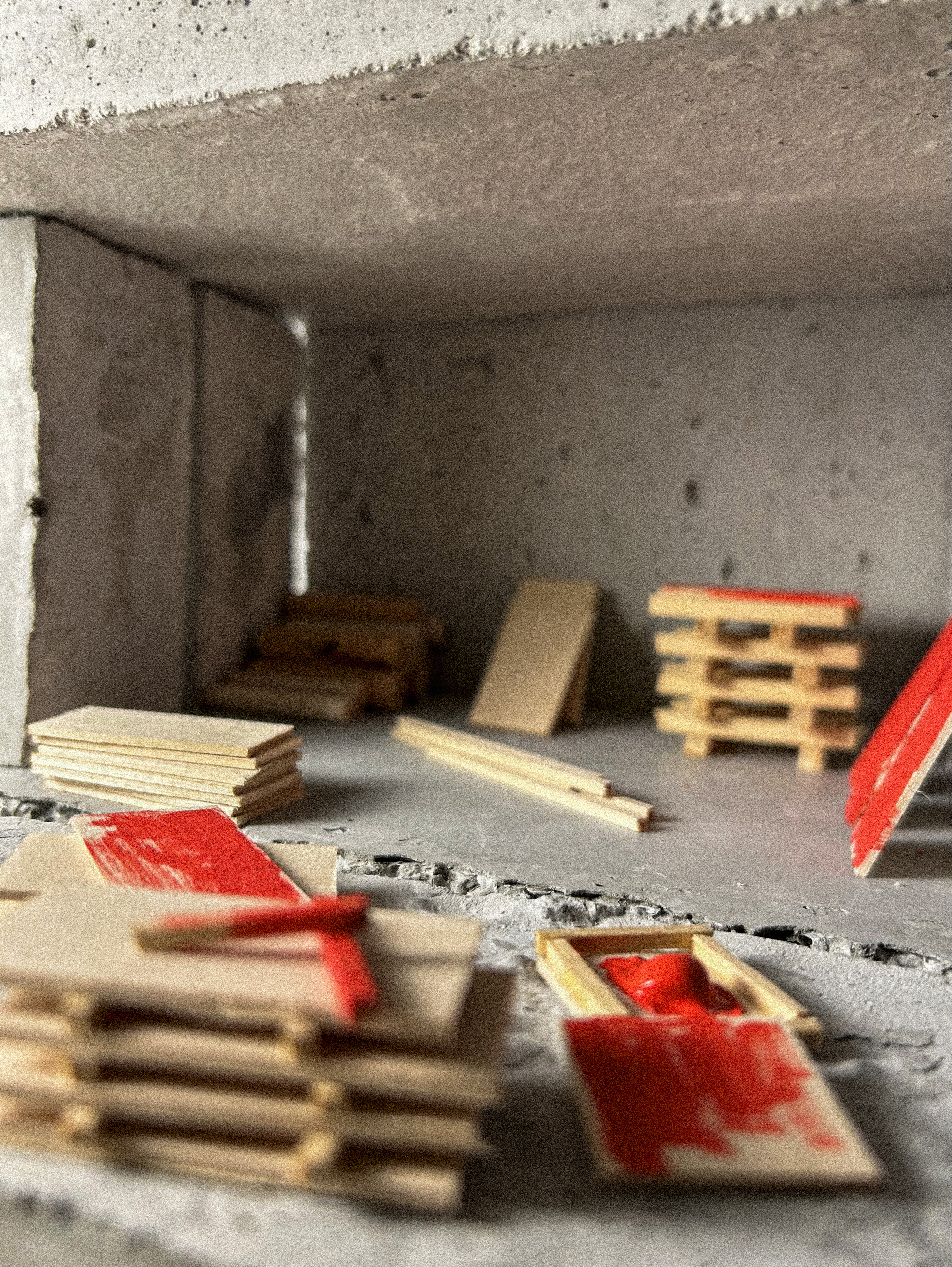
Within this permanent framework, a second, lighter layer is introduced through reused timber elements collected from local manufacturers and second-hand suppliers. Catalogued, grouped by size, and painted red, these pieces form an open storage of possible objects. Without predefined joints, they can be taken, moved, and assembled elsewhere in the city, especially within local common gardens. Simple drawings on the concrete blocks suggest potential uses such as benches, tables, or gardening supports.
Through circulation, massing, and recombination, the timber elements become social artifacts with unpredictable outcomes. While the concrete structure ensures permanence, the timber resists fixed vocations, echoing Joseph Beuys’s 7000 Oak Trees. As Roland Barthes suggests, reuse becomes an aesthetic grounded in transformation and waste. The pavilion thus operates as a prototype for a process-oriented architecture, permanently unfinished, where collective care reshapes space over time.

 Fràgil Fortuna